How to Meet Discovery Disclosure Deadlines in 2026
Learn how to meet discovery disclosure deadlines in 2026 to ensure evidence admissibility and avoid sanctions. Stay compliant and succeed.

How to Meet Discovery Disclosure Deadlines in 2026
Meeting discovery disclosure deadlines is defined as strict compliance with the Federal Rules of Civil Procedure (FRCP) and court scheduling orders to preserve evidence admissibility and avoid sanctions. Under Rule 37©(1), failure to disclose on time triggers automatic evidence exclusion without a court order. For criminal defense attorneys, that consequence is not theoretical. It directly affects what you can present at trial. This guide covers the specific deadlines you must track, how to interpret scheduling orders correctly, and the practical steps your team needs to stay compliant in 2026 litigation practice.
What are the essential discovery disclosure deadlines you must know?
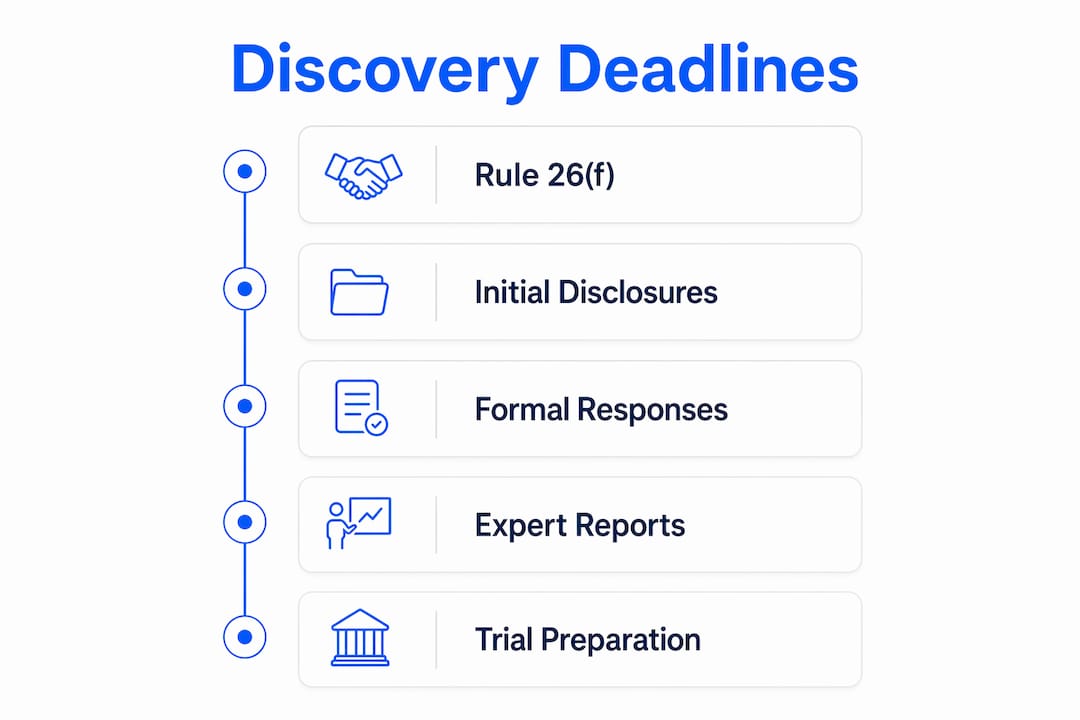
The discovery disclosure timeline under federal rules follows a fixed sequence. Each deadline builds on the one before it. Missing one creates a chain reaction that is difficult to recover from.
Initial disclosures
Initial disclosures are due within 14 days after the Rule 26(f) conference. This covers witness lists, document categories, damages calculations, and insurance agreements. Failure to meet this deadline can result in automatic exclusion of evidence under Rule 37©(1), unless the omission is justified or harmless. That is a high bar to clear mid-trial.

Responses to formal discovery requests
Responses to interrogatories, document requests, and requests for admission are generally due within 30 days of service under federal rules. Some jurisdictions extend this window. Vermont, for example, allows 42 days when discovery is served alongside a summons and complaint. Check your local rules before assuming the federal default applies.
Expert and pretrial disclosures
Federal expert disclosures must be made at least 90 days before trial. Rebuttal expert reports are due 30 days after the initial expert disclosures. Pretrial disclosures, including final witness and exhibit lists, are due 30 days before the trial date. These deadlines are hard cutoffs. Courts rarely grant extensions without a showing of good cause.
| Disclosure type | Federal deadline |
|---|---|
| Initial disclosures | 14 days after Rule 26(f) conference |
| Discovery responses | 30 days after service |
| Expert disclosures | 90 days before trial |
| Rebuttal expert reports | 30 days after initial expert reports |
| Pretrial disclosures | 30 days before trial |
Pro Tip: Print the scheduling order on day one and map every deadline into your team calendar before doing anything else on the case. Deadlines you see daily are deadlines you do not miss.
How do you accurately interpret and track scheduling orders?
The Rule 16(b) scheduling order is the controlling document for every discovery deadline in your case. It supersedes the FRCP defaults. Misalignment between your internal calendar and the judge’s scheduling order is one of the leading sources of legal malpractice claims. Read the order carefully, and read it again.
Calculating deadlines correctly requires applying Rule 6 of the FRCP. Rule 6 excludes the triggering event from the count, includes weekends and holidays in most calculations, and pushes deadlines falling on a weekend or legal holiday to the next business day. Miscounting deadlines under Rule 6, especially around federal holidays, is a documented source of malpractice risk.
Follow these steps to build a reliable deadline tracking system:
- Pull the scheduling order immediately after it is entered and identify every discovery deadline by name and date.
- Apply Rule 6 counting rules to verify each date, cross-referencing with a court-specific deadline calculator or automated docketing software.
- Enter every deadline into a shared team calendar with two internal alerts: one 14 days out and one 3 days out.
- Assign a named team member as the deadline owner for each category of disclosure.
- Build a 5-day buffer before each cutoff to handle disputes, deficiencies, or last-minute production issues.
Pro Tip: Never rely on mental arithmetic to count deadlines. Use a court-specific deadline calculator or docketing software every time. One miscounted holiday can cost your client their case.
What practical steps can your legal team take to meet disclosure deadlines reliably?
Reliable compliance with legal deadlines for discovery starts at the Rule 26(f) conference, not the night before a filing is due. The Rule 26(f) conference is the most important event for controlling the discovery timeline. Treat it as a negotiation, not a formality. Use it to limit the scope of discovery, establish ESI protocols, and negotiate a schedule that gives your team realistic production windows.
After the conference, create a master deadline calendar shared across your entire legal team. Every attorney, paralegal, and legal assistant on the case needs real-time visibility into what is due and when. A deadline that only one person knows about is a deadline at risk.
Serve your discovery requests early. Discovery completion is defined as actual receipt of responses or conclusion of depositions, not the date you sent the request. If you serve interrogatories three weeks before the discovery cutoff, you will not have responses in hand before the cutoff. Serve requests with enough lead time to receive responses, review them for deficiencies, and file a motion to compel if necessary.
- Serve all discovery requests at least 45 days before the discovery cutoff to preserve your right to compel responses.
- Monitor incoming responses immediately upon receipt and flag incomplete or evasive answers within 48 hours.
- Maintain a running compliance log documenting what was served, when, and what was received in return.
- Prepare a defensible Brady-trail audit log for every action taken on case files, which Caseflow generates automatically.
- Keep copies of all correspondence with opposing counsel about discovery disputes, extensions, and agreements.
Pro Tip: If you negotiate a deadline extension with opposing counsel, confirm it in writing and file a stipulation with the court. Verbal agreements about deadlines are unenforceable and create malpractice exposure.
What are the common mistakes in meeting discovery deadlines, and how can you avoid them?
The most damaging mistake criminal defense attorneys make is ignoring requests for admission deadlines. Missed requests for admission deadlines result in automatic admissions of the stated facts, without any court order required. Withdrawing a deemed admission requires a formal motion, substantial justification, and proof of no prejudice to the opposing party. That is a difficult motion to win.
A second common error is confusing the date discovery requests are served with the date discovery is complete. Discovery is complete when responses are received and depositions are concluded, not when requests go out. Attorneys who serve requests late in the discovery period routinely find themselves without usable responses before the cutoff.
“Attorneys need to serve requests early enough to ensure responses fall well before the cutoff date, allowing time to address deficiencies.” — How to Calculate Discovery Cutoff Dates in Federal Civil Litigation
Other frequent pitfalls include:
- Over-relying on mental deadline calculations instead of Rule 6 compliant tools, which leads to miscounts around holidays and weekends.
- Failing to synchronize the internal team calendar with the actual scheduling order, especially after amendments.
- Treating the Rule 26(f) conference as a procedural checkbox rather than a chance to shape the entire discovery schedule.
- Missing the importance of timely disclosures for expert witnesses, which courts treat as a hard cutoff with little tolerance for late additions.
Proactive case management is the only reliable defense against these risks. Build systems, not habits.
Key Takeaways
Meeting discovery disclosure deadlines requires a combination of knowing the exact federal timelines, interpreting scheduling orders correctly, and building team systems that catch errors before they become sanctions.
| Point | Details |
|---|---|
| Initial disclosures are time-sensitive | File within 14 days after the Rule 26(f) conference or risk automatic evidence exclusion. |
| Scheduling orders control everything | The Rule 16(b) order supersedes FRCP defaults; misreading it is a leading malpractice cause. |
| Serve discovery requests early | Responses must be received before the cutoff, not just requested before it. |
| Missed admission deadlines are automatic | Failing to respond to requests for admission creates binding admissions without a court order. |
| Use tools, not mental math | Rule 6 deadline counting requires court-specific calculators or docketing software every time. |
What I have learned from years of watching discovery deadlines fail
The attorneys I have seen get burned by discovery deadlines were not careless. They were busy. They had too many cases, too many moving parts, and too much confidence in their own memory. That is the real risk profile for a missed deadline: not negligence, but overload.
The Rule 26(f) conference is where I have seen the biggest gap between what attorneys do and what they should do. Most treat it as a scheduling call. The attorneys who consistently stay ahead of their discovery disclosure timeline treat it as a negotiation session. They push for longer response windows, narrow the scope of ESI production, and lock in a schedule that gives their team room to work. That difference in approach shows up months later when deadlines hit.
Technology has changed what is possible here. Automated docketing and audit trail tools remove the human error factor from deadline tracking. Caseflow, for example, generates a Brady-trail audit log automatically, which means every action on a case file is timestamped and documented without anyone having to remember to do it. That kind of built-in accountability is not a luxury for a busy criminal defense team. It is a necessity.
The attorneys who avoid sanctions are not smarter. They have better systems.
— Faisal
How Caseflow supports criminal defense teams on discovery compliance
Criminal defense teams that need to stay ahead of disclosure deadlines have a concrete option in Caseflow.
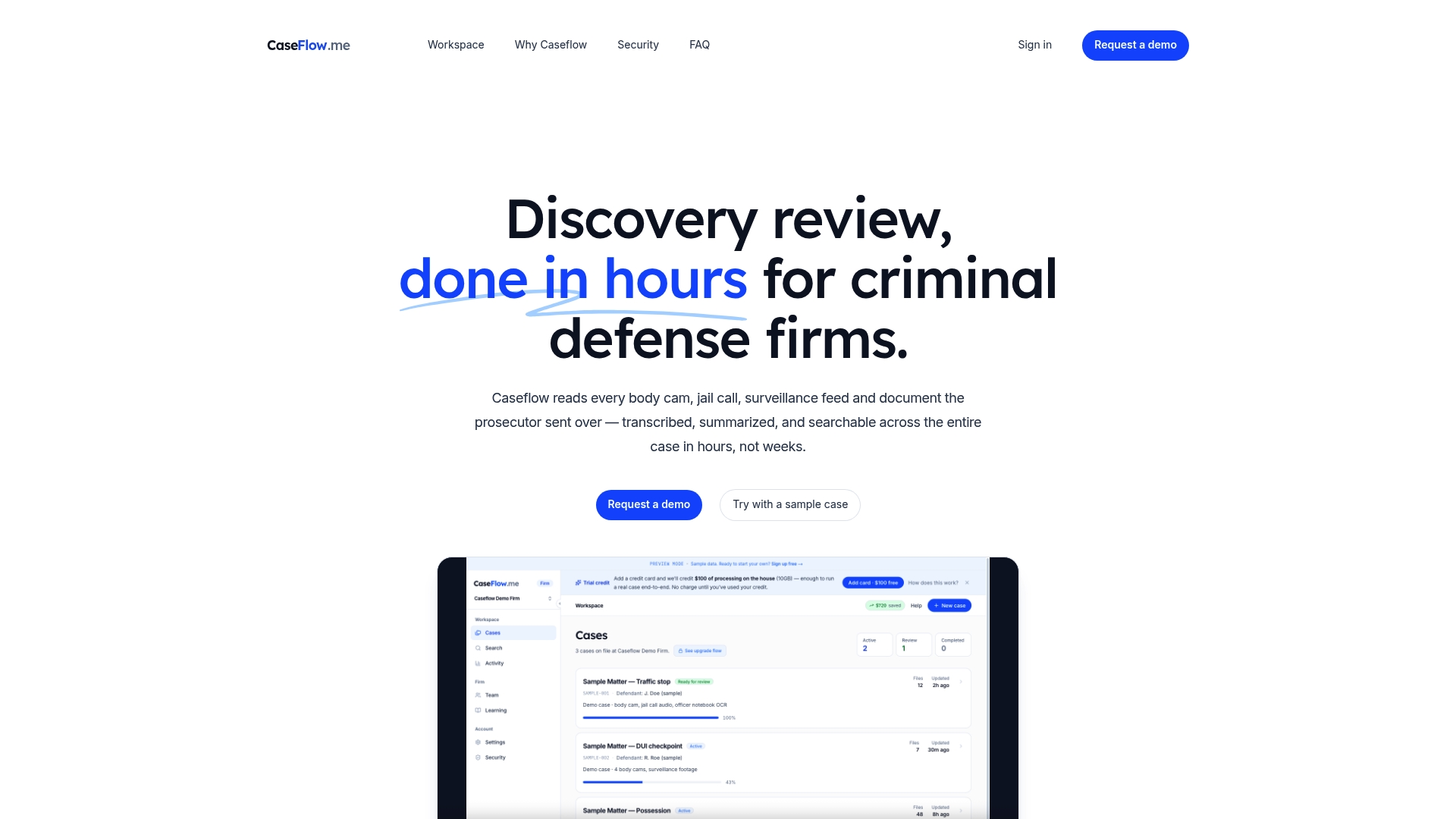
Caseflow reduces the time spent reviewing case files from weeks to hours through transcription, summarization, and searchable entity extraction in one platform. The Brady-trail audit log tracks every action on every file, giving your team a defensible compliance record without manual documentation. Automated deadline alerts and multi-language evidence processing mean your team spends less time on administration and more time building the defense. Explore Caseflow to see how criminal defense teams are cutting discovery review time and staying compliant with court-imposed schedules.
FAQ
What happens if you miss the initial disclosure deadline?
Missing the 14-day initial disclosure deadline after the Rule 26(f) conference can trigger automatic evidence exclusion under Rule 37©(1) without a court order, unless the failure is justified or harmless.
How long do you have to respond to discovery requests?
Federal rules give you 30 days to respond to interrogatories, document requests, and requests for admission. Some states allow longer periods, so always check local rules.
Can you get a discovery deadline extension?
Courts may grant extensions for good cause, but you must file a formal motion or stipulation. Verbal agreements with opposing counsel are not enforceable and do not protect you from sanctions.
What is the expert disclosure deadline in federal court?
Expert witness disclosures are due at least 90 days before trial. Rebuttal expert reports must be served within 30 days after the initial expert disclosures.
Why are requests for admission deadlines especially risky?
Failing to respond to requests for admission results in automatic admissions of the stated facts. Reversing a deemed admission requires a formal motion and proof that withdrawal causes no prejudice to the opposing party.
Recommended
Procedural content for defense attorneys — not legal advice in your jurisdiction.
Start free trial · $100 credit